Getting flagged as spam in Telegram is easier than most people expect, and recovering from it is harder. Understanding why it happens — and how to avoid it — is useful for anyone who communicates actively across Telegram communities, whether as an individual, a community manager, or a business.
Teleteg is a public Telegram search engine indexing millions of public channels and groups. This article is part of our knowledge base on Telegram search and community discovery.
📊 Spam flag risk factors
- New accounts (under 30 days old) face stricter automated limits
- Messages with URLs are scrutinised more heavily than text-only messages
- @SpamBot reviews typically resolve within 24-48 hours for first offences
- Accounts restricted once are 3x more likely to be restricted again
How Telegram's Spam Detection Works
Telegram uses a combination of automated systems and user reports to identify spam. The automated side looks for patterns: identical or near-identical messages sent to multiple groups in a short window, high-frequency messaging from a new or low-reputation account, and links that have been flagged by other users.
The user-report side is more unpredictable. If enough members of a group report a message or account, Telegram's systems take notice — regardless of whether the content is technically spam. This means that even legitimate messages can be flagged if they land badly with the audience.
Practical Steps to Avoid Flags
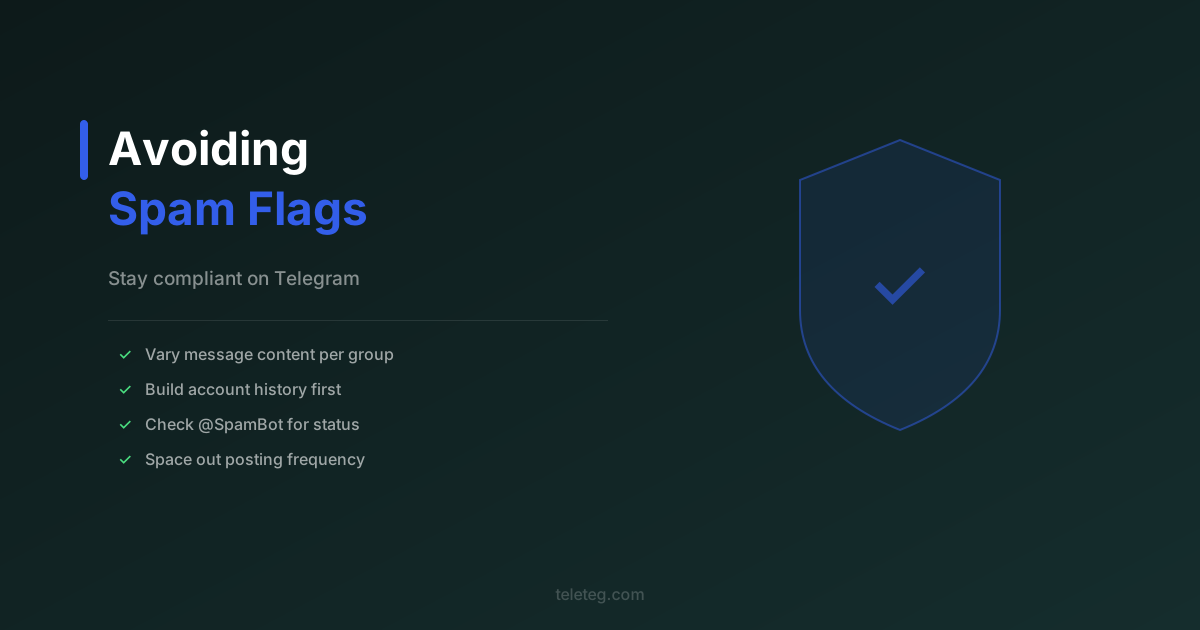
Vary your messages. Sending identical text across multiple groups is one of the clearest spam signals. Even small changes — adapting the opening sentence to reference the specific group's topic — significantly reduce the risk.
Build account history before scaling activity. New accounts that immediately begin posting in many groups attract scrutiny. An account with normal activity history — joining groups gradually, participating in conversations before posting links — is treated very differently by Telegram's systems.
Pay attention to posting frequency. There's no published limit, but posting the same type of content more than once per day in a group is often where issues start. In most groups, once every few days is a reasonable frequency for anything that could be perceived as promotional.
Avoid link-heavy messages. Messages that are primarily a URL with minimal context score badly. Leading with the value — what the link is, why it's relevant to this specific group — and following with the link performs better both with users and with automated filters.
If You Get Flagged
Telegram's spam restrictions range from temporary message blocks to account limitations. Minor restrictions usually lift after a period of normal activity. More serious ones require appealing through Telegram's official channels — @SpamBot is the standard starting point for checking your account's status and submitting a review request.
Prevention is significantly easier than remediation. An account that's been restricted once is more likely to be restricted again, so the habits that prevent the first flag are worth maintaining consistently.
The Underlying Principle
Most spam flags are avoidable by treating each group as a distinct community rather than a broadcast channel. Groups have existing cultures, ongoing conversations, and members who came for a specific purpose. Messages that fit the context and add something to the conversation rarely get reported, regardless of whether they contain a link or mention a product.
Frequently Asked Questions
Why is my Telegram account getting restricted?Common causes: sending identical messages to multiple groups quickly, high-frequency posting from a new account, or user reports. Telegram's automated systems detect these patterns and apply restrictions.
How do I check if my account is spam-flagged?Message @SpamBot on Telegram. It shows your current account status and lets you submit a review request if restricted.
Can legitimate promotional messages get spam-flagged?Yes. Even legitimate content gets flagged if sent to many groups simultaneously or from an account with no history there. Personalising messages per group and spacing timing reduces this risk significantly.