Running a Telegram channel without a content plan is like publishing a newsletter without knowing who reads it or why. You post when inspiration strikes, the gaps between posts grow longer, and the audience you spent time building quietly drifts away. A simple plan — even one that fits on a single page — prevents most of this.
Teleteg is a public Telegram search engine indexing millions of public channels and groups. This article is part of our knowledge base on Telegram search and community discovery.
Start With the Purpose, Not the Calendar
Before deciding how often to post, it's worth being clear on what the channel is actually for. A channel that aggregates news in a niche needs to post frequently to stay useful. A channel that publishes original analysis can post less often without losing relevance. A community-oriented channel that mixes updates with discussion needs a different rhythm again.
These aren't interchangeable formats. Trying to run a high-frequency news feed with the energy suited to a weekly digest — or vice versa — is what usually causes channels to stall. Picking a format that matches the actual resources you have is more important than picking the one that sounds most impressive.
Decide on Frequency You Can Actually Sustain
Consistency matters more than volume. A channel that posts three times a week reliably for a year will outperform one that posts daily for a month and then goes quiet. Subscribers develop habits around channels they follow — they know roughly when to expect new content, and they come back for it.
A practical starting point: define a minimum posting frequency you could maintain even during a busy week, then build upward from there. For most channels, three to five posts per week is sustainable. Daily posting is realistic only if you have a clear, repeatable content format that doesn't require much original work per post.
Content Types and Why Mixing Them Helps
Most successful channels don't post one type of content exclusively. A mix of formats — links with commentary, original short-form writing, questions or polls, occasional longer pieces — keeps the channel from feeling repetitive and gives different segments of the audience something to engage with.
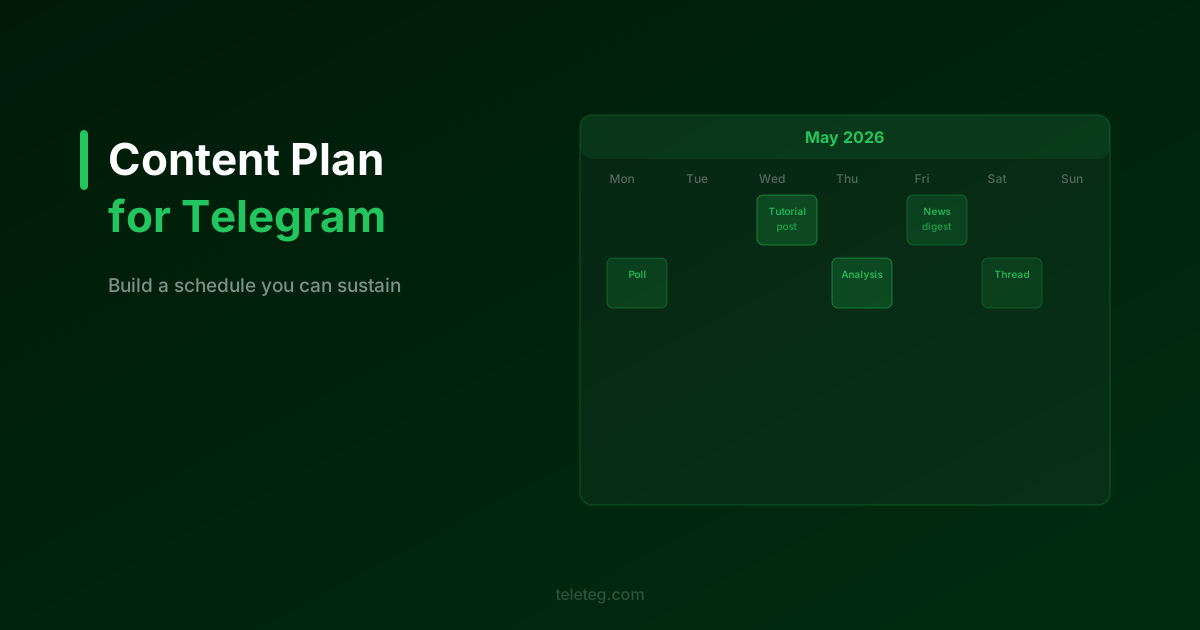
A simple content calendar might allocate specific days to specific formats: Mondays for a weekly roundup, Wednesdays for an original take, Fridays for something lighter or interactive. The exact structure matters less than having one, because it removes the daily decision about what to post.
Understanding Your Audience Before You Plan
The most useful thing you can do before finalising a content plan is understand what similar channels are doing and how their audiences respond. Teleteg makes this straightforward — searching for channels in your topic area and looking at their activity ratings, message quality scores, and member counts gives you a realistic benchmark for what works in your niche.
This isn't about copying what others do. It's about understanding the environment your channel operates in before investing time in a format that may not fit the audience's expectations.
Revising the Plan
A content plan should be a working document, not a fixed schedule. What the audience responds to will become clear within the first few months. Posts that generate forwards and replies are telling you something; posts that land silently are telling you something else. Building in a regular moment to review what's working — even just once a month — is what turns a content plan from a good intention into a useful tool.