Finding relevant Telegram groups and building a structured list of communities around a specific topic is useful for a range of purposes — market research, community outreach, competitive analysis, or understanding where conversations in your niche are happening. Doing this manually, one search at a time, is slow and produces inconsistent results. A more systematic approach saves time and produces a better dataset.
Teleteg is a public Telegram search engine indexing millions of public channels and groups. This article is part of our knowledge base on Telegram search and community discovery.
Why Group Lists Are Useful
A curated list of active Telegram groups in a specific topic area gives you a starting point for several things: understanding who the key communities are, identifying where your target audience spends time, finding potential collaboration partners, or simply monitoring a space you care about.
The quality of the list matters more than the quantity. A hundred active, relevant groups is more useful than a thousand that include abandoned communities, off-topic results, and duplicate entries.
Using Teleteg to Build Group Lists
Teleteg is designed specifically for this kind of structured Telegram search. Rather than returning a handful of results from a keyword query, it lets you apply multiple filters simultaneously — language, location, member count range, activity rating, and message quality — to narrow results to exactly the communities you're looking for.
A typical workflow: start with a broad keyword search, apply a language filter to focus on the relevant linguistic community, set a minimum member count to exclude very small groups, and sort by activity rating to prioritise communities that are currently active. The result is a filtered list of groups that match your criteria, with enough metadata to evaluate each one before deciding whether to investigate further.
The search tools guide covers each available filter in detail, including which ones are available at each access tier.
Organising and Maintaining the List
A group list is only useful if it stays current. Telegram communities change — groups go inactive, merge with others, change focus, or get shut down. Building in a regular review — even quarterly — keeps the list from becoming stale.
Useful fields to track for each group: username, member count at time of collection, activity rating, language, primary topic, and any notes on community norms or admin contact information. A simple spreadsheet handles this well for most use cases.
Responsible Use
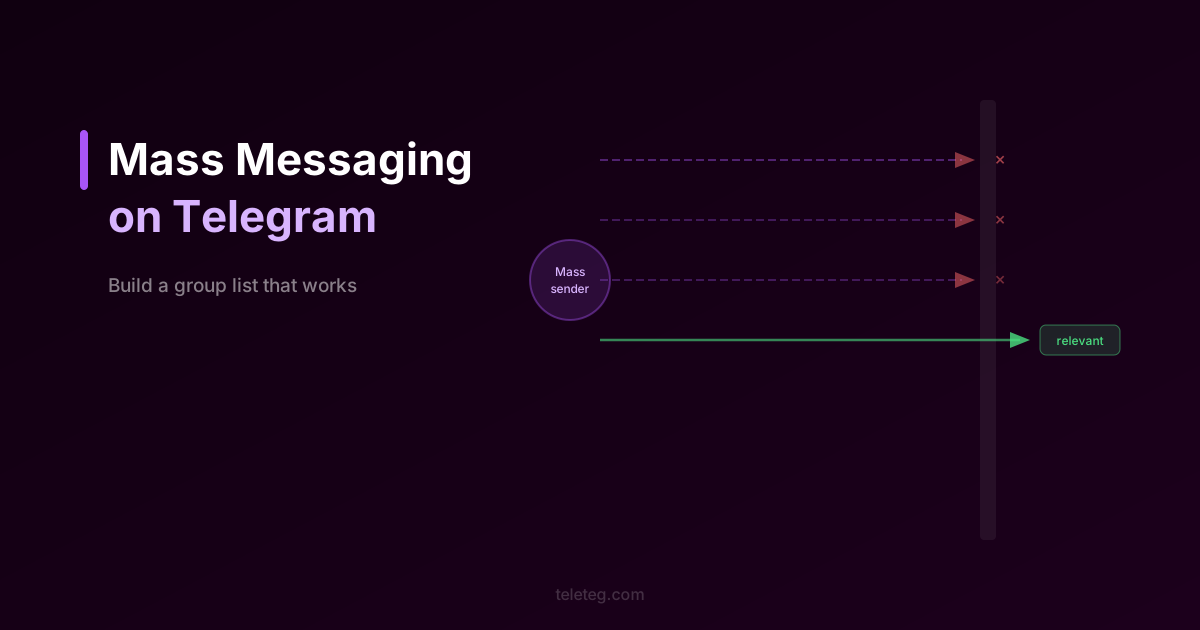
A list of Telegram groups is a starting point for engagement, not a broadcast list. The groups on it are communities with existing members and norms. How you engage with them — whether as a participant, a partner, or a researcher — determines whether the list is actually useful. Communities that are approached with genuine relevance and respect for their existing culture respond very differently from those that receive unsolicited bulk outreach.