Private Telegram groups are communities that don't appear in public search results and can only be joined via a direct invite link. They cover an enormous range of topics — professional networks, local communities, research circles, interest groups — and finding relevant ones is genuinely difficult without the right tools.
Teleteg is a public Telegram search engine indexing millions of public channels and groups. This article is part of our knowledge base on Telegram search and community discovery.
Why Private Groups Are Hard to Find
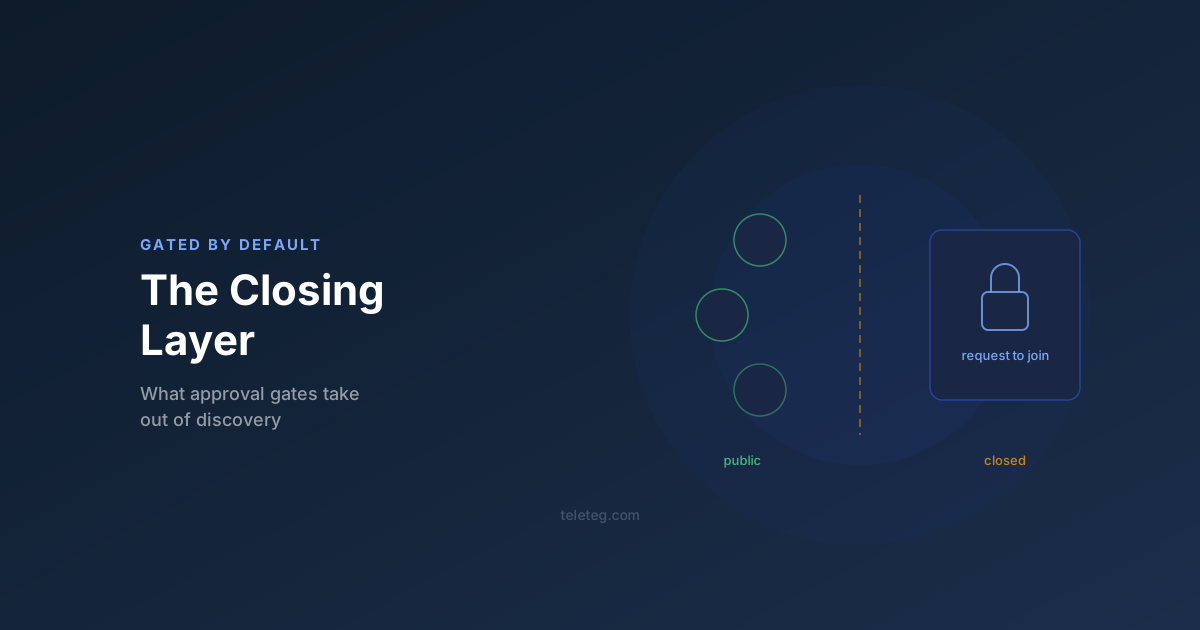
By design, private groups aren't indexed by Telegram's own search. There's no directory. The only standard way in is through a link shared by someone who's already a member. This makes them invisible to most discovery methods and means that finding private groups around a specific topic usually requires either knowing the right people or using indirect signals.
What Teleteg Can Help With
Teleteg indexes public Telegram channels and groups and provides structured search with filters for language, activity, member count, and topic. For public communities, this covers most discovery needs.
For private groups, Teleteg's advanced search tiers provide tools that surface some private communities through indirect indexing signals — without compromising the privacy of their members or contents. This is useful for understanding the landscape of a topic area even when the most active communities operate privately.
The search tools guide covers the available filters in detail, including which features are available at each access level.
Other Ways to Find Private Groups
Beyond dedicated search tools, a few other approaches work in practice. Public channels related to a topic often link to associated private discussion groups — reading through related public content is often the fastest path to finding private communities around the same subject.
Topic-specific forums, subreddits, and Discord servers frequently have Telegram groups affiliated with them. People in those communities often share invite links when asked directly and politely.
LinkedIn and Twitter communities around professional topics sometimes have associated Telegram groups that aren't widely advertised but are findable if you ask in the right places.
A Note on Access and Ethics
Private groups are private for a reason. Finding a group is one thing; how you engage with it once you're there is another. Joining a private community to extract its member list, scrape its content, or promote something without permission violates the implicit trust of the group and, depending on jurisdiction, may raise legal issues around data protection.
Research use cases — monitoring public discourse, understanding community dynamics, fact-checking — are generally legitimate when conducted with appropriate care. Commercial or extractive use cases are a different matter and worth thinking through carefully before proceeding.