A Telegram channel that still works well is one that earns its place in someone's notification list. That's a high bar — people are protective of their attention — but it's also a useful filter for deciding what kind of channel to run.
Teleteg is a public Telegram search engine indexing millions of public channels and groups. This article is part of our knowledge base on Telegram search and community discovery.
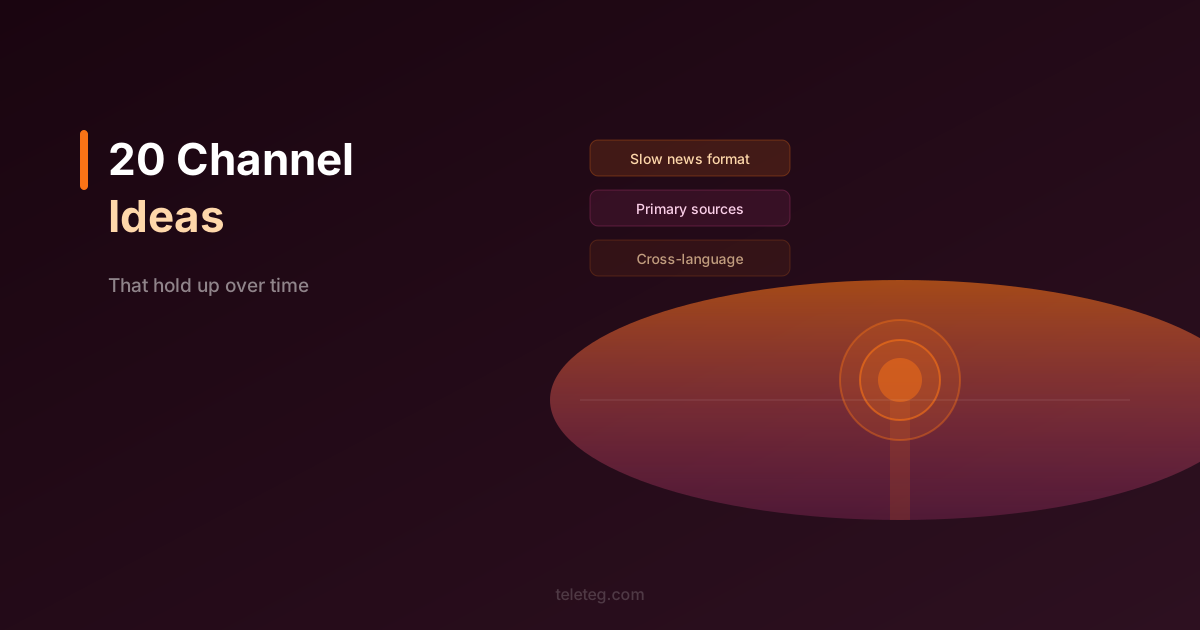
These 20 ideas lean toward formats that hold up over time rather than chasing what's currently popular.
For People Who Want to Share Knowledge
- Annotated reading lists — not just links, but brief notes on what each piece covers and who it's useful for. Saves the audience the effort of deciding what's worth their time.
- Skill-specific micro-lessons — one small, actionable thing per post. Works well for technical topics, languages, cooking, music — anything where incremental progress matters.
- Behind-the-numbers — taking a statistic or data point from the news and explaining what it actually means, where it comes from, and what it doesn't tell you.
- Field notes — observations from a specific professional context, written informally. Practitioners sharing what they're actually seeing, not polished thought leadership.
- Translation and context — making content from one language or cultural context accessible to another audience. Particularly valuable for topics that are covered extensively in non-English media but rarely translated.
For People Who Want to Build Something Specific
- Project diary — documenting the development of something in real time: a startup, a creative project, a research effort. The audience follows the process, not just the outcome.
- Niche product reviews — detailed, honest assessments of products or services in a specific category where generic review sites don't go deep enough.
- Local business guide — recommendations and updates for a specific city or neighbourhood, written by someone who actually lives there.
- Community map — aggregating what's happening in a specific professional or interest community: who's working on what, what events are coming up, what conversations are worth following.
- Reference channel — a curated, searchable archive of resources on a specific topic. Less a feed, more a library that grows over time.
For People Who Want to Cover a Topic Seriously
- Policy and regulation tracker — monitoring specific legislative or regulatory developments that matter to a defined audience. Dry subject, but extremely useful when done well.
- Primary source aggregator — collecting official documents, statements, and data releases in a specific domain, without editorial interpretation. Useful for people who need the source material directly.
- Cross-language monitor — tracking how a topic is covered across different linguistic communities. Highlights gaps and discrepancies that single-language sources miss.
- Long-read recommendations — surfacing in-depth journalism, essays, and reports that deserve more attention than they typically receive.
- Contrarian takes — a channel that deliberately seeks out well-argued minority positions on topics where consensus has hardened. Useful for audiences who want their assumptions challenged.
Formats Worth Experimenting With
- Thread-style deep dives — multi-post sequences that explore a single topic in depth, posted as a series over a few days rather than all at once.
- Audio commentary — voice notes accompanying links or news items. Adds a personal dimension that text alone doesn't carry.
- Weekly one-question poll — a single question related to the channel's topic, followed by a post summarising and responding to the results.
- Corrections and updates — a channel that specifically revisits things that turned out to be wrong or incomplete. Rare enough to stand out; useful enough to build trust.
- Slow news — one important story per day, explained properly, without the pressure to cover everything. A deliberate counter to high-volume news feeds.
Finding Your Space
The best way to test whether an idea is viable is to see what already exists. Searching Teleteg for your topic area shows you which channels are active, how large they are, and what kind of content they post. A topic with many large, active channels is a competitive space. One with a few small channels and high search volume in the keywords is a gap worth filling.