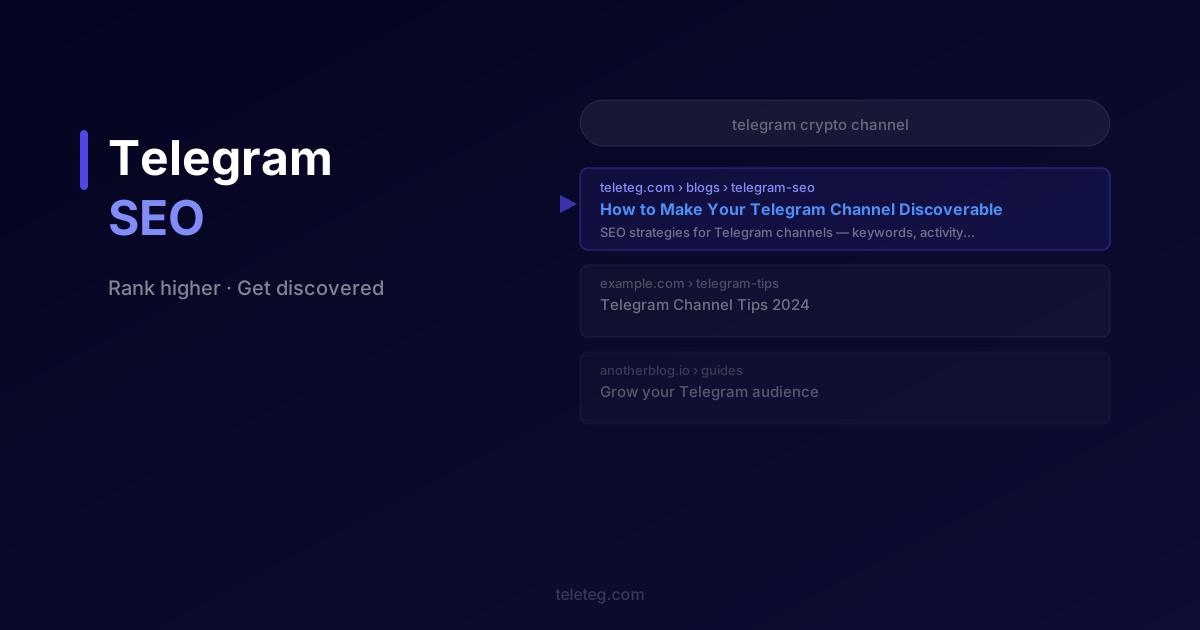
Telegram doesn't have an algorithm that surfaces content the way social media platforms do. There's no feed, no recommendation engine pushing your channel to new audiences. Discovery on Telegram is largely search-driven — which means the way you name, describe, and structure your channel has a direct impact on whether people find it.
Teleteg is a public Telegram search engine indexing millions of public channels and groups. This article is part of our knowledge base on Telegram search and community discovery.
📊 Telegram channel discovery facts
- Telegram has over 800 million monthly active users as of 2024
- Public t.me channel pages are indexed by Google — channel SEO matters
- Channels with consistent posting schedules retain 60%+ more subscribers over 6 months
- Forwards are the most reliable organic growth signal on Telegram
This guide covers the practical steps to make a Telegram channel more discoverable, both within Telegram itself and through external search engines like Google.
Start With Your Channel Name and Username
The channel name and username are the two most search-visible elements of any Telegram channel. Telegram's native search indexes both, so including a clear, descriptive term in your channel name significantly improves how often it appears when someone searches a relevant topic.
A few things worth keeping in mind:
- The username (the @handle) is permanent once set and appears in your channel's URL. Choose it carefully — ideally something short, memorable, and related to the topic.
- The channel name can be changed, but frequent changes can confuse existing members and affect how the channel is indexed externally.
- Avoid stuffing the name with multiple keywords. One clear, descriptive phrase works better than a list of terms.
Write a Description That Works
The channel description is indexed by Telegram search and by Google. It's also what potential members read before deciding whether to join. A good description does three things: explains what the channel is about, signals who it's for, and includes the natural language someone would use when searching for that topic.
This doesn't mean keyword-stuffing. It means writing clearly about what the channel covers. If your channel is about urban planning in Southeast Asia, say exactly that — don't write "urban infrastructure development opportunities in the ASEAN region" just because it sounds more formal.
Consistency and Posting Frequency
Activity signals matter both for Telegram's internal search ranking and for tools like Teleteg that surface channels based on activity metrics. A channel that posts regularly — even if infrequently — will consistently rank higher than one that posts in bursts and then goes silent for weeks.
There's no ideal posting frequency that applies to every channel. What matters more is predictability. Members who know when to expect new content are more likely to stay engaged, and engagement in turn affects how the channel appears in search results.
Understanding Your Niche Before You Grow
One of the most useful steps before investing in growing a channel is understanding what already exists in your niche. How many channels cover similar topics? How active are they? What languages do they operate in? What's the typical member count for a well-established channel in this space?
This kind of landscape research is straightforward with Teleteg. Searching for your topic with filters for language, activity rating, and member count gives you a clear picture of the competitive environment — and can surface communities that might be worth collaborating with or studying as benchmarks.
The Teleteg search tools guide explains each available filter in detail if you want to go deeper on this kind of analysis.
External Discoverability: Google and Beyond
Telegram channels with public usernames have indexable URLs — t.me/yourchannel — and Google does crawl them. The channel name, description, and recent public posts all contribute to how the channel appears in Google search results.
Beyond the channel itself, being mentioned or linked from external sources — a website, a newsletter, a blog post — significantly improves discoverability. If you have a website or any web presence, linking to your Telegram channel from it passes authority and makes the channel easier to find through Google.
What Doesn't Work
A few approaches that are commonly attempted but rarely produce lasting results:
- Buying members — inflated member counts with no real engagement lower your activity ratio and make the channel look less credible to anyone who looks closely, including potential genuine members.
- Posting in unrelated groups — this tends to result in bans and doesn't produce quality followers.
- Renaming the channel repeatedly — disrupts existing members and resets some of the search indexing built up under the previous name.
Sustainable growth on Telegram comes from having a clear topic, posting consistently, and being findable — both within Telegram and externally. The tools to understand your niche and benchmark your channel against others in the same space are there; using them before spending time on promotion usually produces better results.
Frequently Asked Questions
How do I make my Telegram channel appear in search results?Include relevant keywords in your channel name and description. Post consistently to maintain a high activity rating. Get your t.me link mentioned from external sources — all of this is indexed by both Telegram and Google.
Does Telegram SEO affect Google rankings?Yes. Public Telegram channel pages at t.me are crawled by Google. The name, description, and recent public posts all contribute to how the channel appears in Google search results.
How often should I post for SEO?Consistency matters more than volume. Three to five posts per week reliably outperforms daily posting that stops after a month. Telegram's ranking considers activity patterns over time.