Telegram has become one of the more interesting places to track how topics evolve in real time. Unlike social media platforms with algorithmic feeds, what surfaces on Telegram tends to reflect genuine community interest — people join groups and channels around specific topics and stay because the content is relevant to them. That makes it a surprisingly useful signal for understanding what's gaining traction in a particular niche.
Teleteg is a public Telegram search engine indexing millions of public channels and groups. This article is part of our knowledge base on Telegram search and community discovery.
What "Trends on Telegram" Actually Means
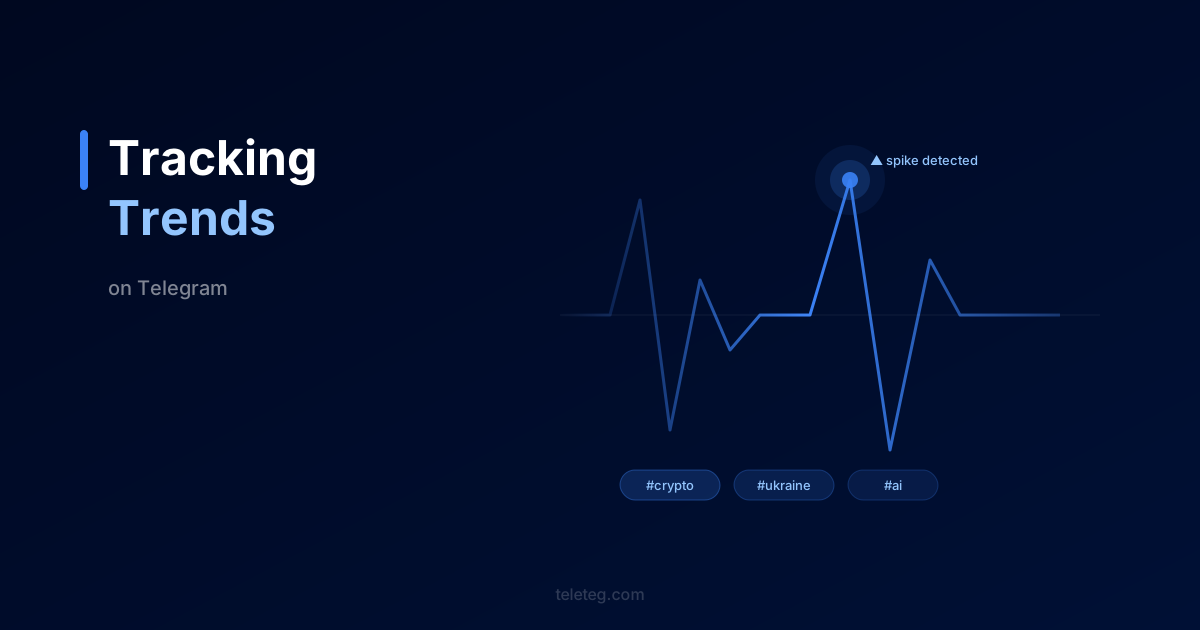
A trend on Telegram isn't a hashtag or a viral post — it's more like a shift in conversation density. When a topic starts appearing across multiple unrelated groups simultaneously, or when a previously quiet channel suddenly sees a spike in engagement, something has changed. Tracking that shift is what trend analysis on Telegram is really about.
This kind of analysis is useful for several purposes: understanding what topics a community cares about right now, spotting emerging discussions before they go mainstream, or simply keeping up with a fast-moving space like crypto, geopolitics, or technology.
Using Teleteg to Map Topic Landscapes
Teleteg doesn't provide a real-time trend feed, but it does give you the tools to do your own landscape mapping. Searching for a keyword and sorting results by activity rating shows you which communities are currently most engaged with a topic. Filtering by creation date lets you see whether new groups are forming around it — a reliable sign that interest is growing.
Comparing results across different language filters is particularly useful for international topics. A subject that's generating active discussion in Russian- or Arabic-language groups but hasn't yet surfaced in English-language ones is often early-stage from a global perspective.
Keyword Frequency as a Proxy for Interest
One practical approach: search the same keyword across different time periods by looking at when groups discussing it were created. A cluster of groups formed within the same few months often indicates a period when the topic peaked. This isn't a perfect methodology, but it's a fast way to get a rough sense of how interest in a subject has developed over time on the platform.
The advanced search filters — particularly the activity rating and message quality index — help separate communities where the topic is genuinely active from those where it appears only incidentally in the group name.
What This Is Good For
Trend analysis on Telegram is most useful for people who need to understand a specific community or topic area in depth: people monitoring a fast-moving sector, tracking how particular narratives spread across communities, or trying to understand what a specific audience is paying attention to right now.
It's less useful as a general news feed — Telegram is too fragmented and too language-specific for that. But within a well-defined topic area, the signal quality is often higher than on more algorithmically curated platforms.
Frequently Asked Questions
How can I track trending topics on Telegram?Search your topic on Teleteg and sort by activity rating. A cluster of newly created groups with high activity indicates a trending topic. Comparing across language filters shows whether a trend is global or regional.
Is there a real-time trend feed for Telegram?Telegram has no native trending feed. Teleteg's activity rating and creation date filters serve as proxies — spikes in new group formation around a keyword reliably signal emerging interest.