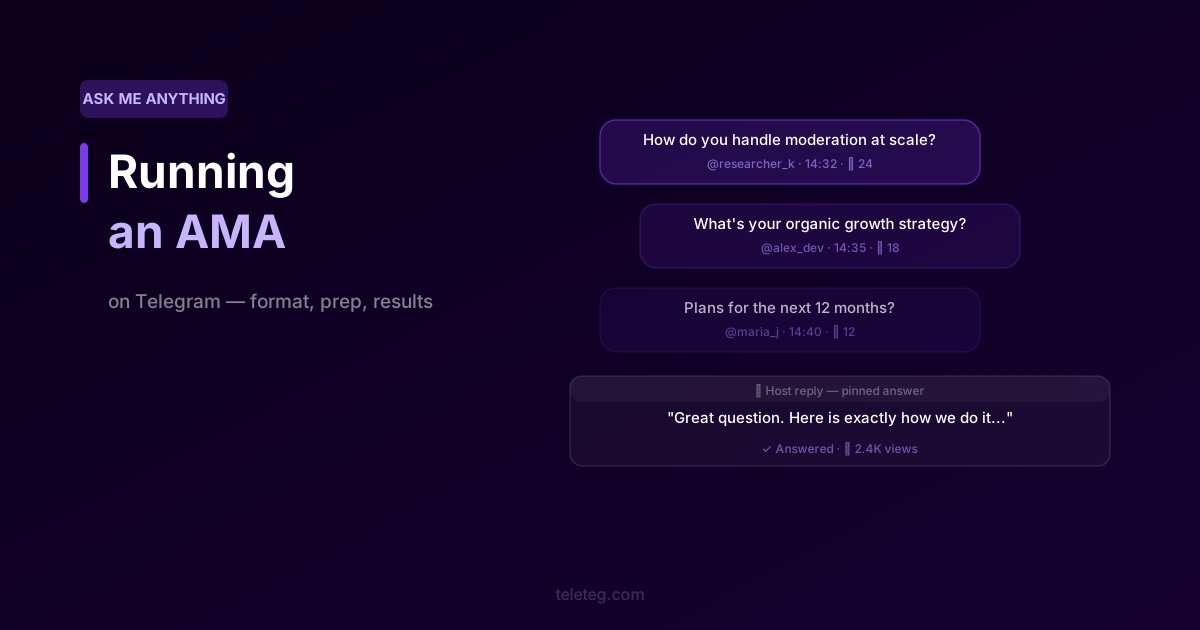
An AMA — Ask Me Anything — is one of the more effective formats for building genuine trust with a Telegram community. Done well, it creates a direct, unscripted conversation between whoever is running it and the people who care enough to show up and ask. Done poorly, it's a staged Q&A that convinces nobody of anything.
Teleteg is a public Telegram search engine indexing millions of public channels and groups. This article is part of our knowledge base on Telegram search and community discovery.
This guide covers how to run an AMA on Telegram that actually works — the format, the preparation, the common pitfalls, and why the format has become particularly important in communities where trust is hard-won.
Why AMAs Work on Telegram
Telegram's group format is well-suited to AMAs. Unlike staged social media events, a Telegram AMA happens in a familiar environment for community members — the same group where they have regular conversations. The informality of the medium encourages more direct questions and more honest answers.
For projects or individuals with communities built around accountability — open-source projects, startups, public figures, crypto teams — the AMA format provides a structured way to be accessible without the format becoming overwhelming. Members who want depth get it; members who just want to follow along can read the transcript afterwards.
Formats That Work
Live AMA in a supergroup. The host or team joins the group at a scheduled time and answers questions as they come in. Works best with an active moderator who can organise questions and keep the conversation focused. Produces the most genuine exchanges but requires real-time attention.
Collected questions, answered in batches. Questions are submitted in advance — via a pinned post, a separate collection period, or a form — and answered in a detailed post. Less spontaneous but easier to manage and produces more complete answers. Suits complex topics where questions require considered responses.
Video or voice AMA with text summary. The host records a voice message or video answering questions, with a text summary posted afterwards. Adds a personal dimension that text alone doesn't carry, and the summary ensures the content remains searchable and shareable.
Preparation Makes the Difference
The questions that derail an AMA are usually predictable. Spending an hour before the event identifying the difficult questions — the ones the community is genuinely uncertain or concerned about — and preparing honest, specific answers to them produces a much better result than going in unprepared and improvising.
This doesn't mean scripting the answers. It means knowing what the community actually wants to know, which is different from what you'd prefer to be asked. The willingness to answer the hard questions directly is usually what separates an AMA that builds trust from one that damages it.
Promotion and Timing
Announce the AMA at least a few days in advance, with a clear time (including timezone), a brief explanation of who will be answering, and an invitation for members to submit questions ahead of time. This gives people who can't attend live a way to participate, and it surfaces the questions the community actually cares about.
Timing matters more than it might seem. Scheduling an AMA when your core audience is likely to be online — check your group's activity patterns — significantly affects turnout and question quality.
After the AMA
Post a summary or transcript after the event. Members who missed it will read it; external audiences who discover the community later will find it useful. An AMA that produces no lasting record is a missed opportunity. Pin the summary in the group and, if the questions and answers are substantive, consider publishing them in your channel as well.
Finding Communities Where AMAs Are Common
If you're trying to understand how AMAs work in practice before running one, or if you're looking for communities in your niche to participate in, Teleteg lets you search active public Telegram groups by topic and filter by activity level — useful for finding the communities where these conversations actually happen.