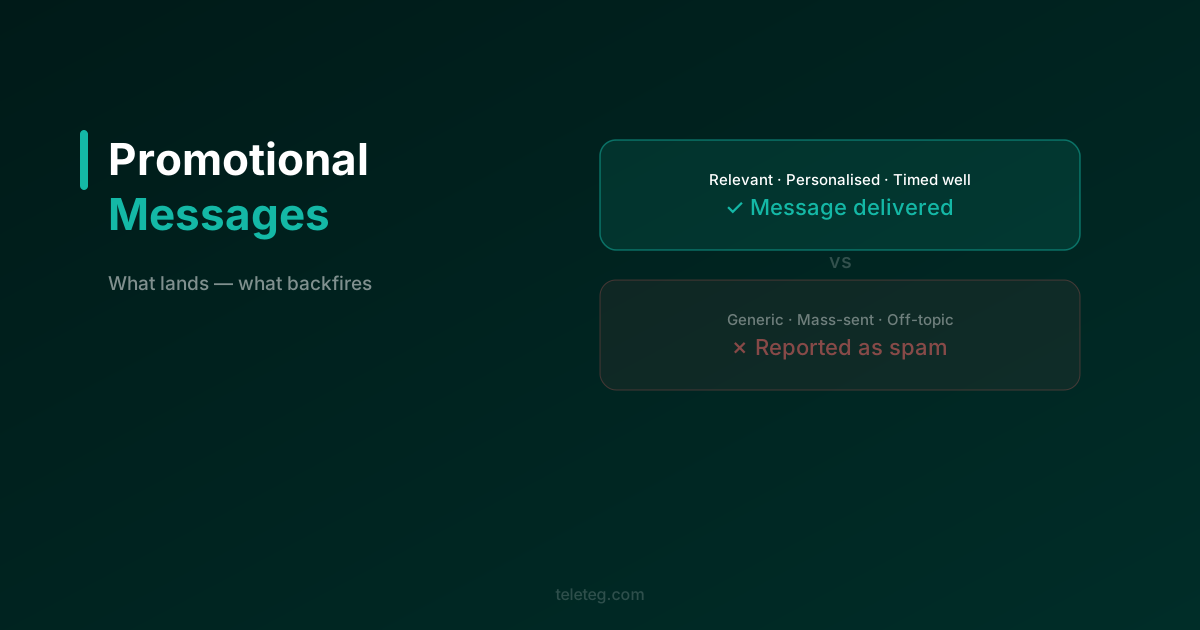
Promotional messages on Telegram can work well or backfire badly depending almost entirely on context. The same message — a product announcement, a service offer, an event invitation — lands completely differently in a community where it's relevant and expected versus one where it arrives uninvited.
Teleteg is a public Telegram search engine indexing millions of public channels and groups. This article is part of our knowledge base on Telegram search and community discovery.
The Context Problem
Most failed promotional messages on Telegram fail for the same reason: they're sent to communities that weren't consulted and don't care. A crypto project announcement in a cooking group, a job listing in a language learning channel, a product promotion in a group that explicitly prohibits it — these aren't just ineffective, they actively damage the sender's reputation in the communities that matter.
The prerequisite for any promotional message that works is landing in a context where it's genuinely relevant. This requires knowing which communities exist in your topic area and what their norms are around promotional content — before sending anything.
Finding the Right Communities
Teleteg makes this research straightforward. Searching by topic with filters for language, activity, and member count gives you a structured view of the public Telegram landscape in any niche. From that list, you can identify communities where your message would fit, check their rules, and approach admins with a specific, relevant proposal rather than a generic outreach request.
Many active Telegram channels and groups explicitly allow promotional content — some charge for it, others welcome relevant contributions from community members. Finding these channels through structured search is faster and more reliable than manual browsing.
Writing Messages That Work
Promotional messages that perform well in Telegram communities tend to have a few things in common: they're specific about what's being offered and who it's for, they're honest about the commercial nature of the message, and they add something — information, an offer, a resource — that the audience actually finds useful.
Generic copy-paste promotions, excessive formatting designed to grab attention, and messages that bury the promotional nature under layers of preamble all perform worse than direct, clearly labelled communications. Telegram audiences are experienced enough to recognise promotional content; presenting it honestly is more effective than trying to disguise it.
Timing and Frequency
Even welcome promotional content becomes unwelcome through repetition. In groups that allow promotional posts, once every few days is a reasonable ceiling for most types of content. In groups where promotional posts are permitted but not the primary purpose, less frequent posting — and more participation in non-promotional discussions — builds the kind of credibility that makes promotional posts more effective when they do appear.
Your Own Channel as the Foundation
The most sustainable promotional strategy on Telegram is building a channel that people subscribe to because they find it valuable, and then promoting your products or services to that audience. Subscribers who opted in are far more receptive than members of groups who received an unsolicited message. Growing that subscriber base — through content quality, cross-promotion with relevant channels, and being findable in search — is the work that makes everything else more effective.