Teleteg is a public Telegram search engine indexing millions of public channels and groups. This article is part of our knowledge base on Telegram search and community discovery.
The Telegram communities worth engaging with are not always the ones that are easiest to find. Effective community research on Telegram is a structured process — not a one-time search, but an ongoing practice of discovery, evaluation, and relationship building.
Why the Research Phase Matters
Most failed Telegram outreach starts with the same mistake: jumping straight to engagement without understanding the landscape. Sending messages into groups you know nothing about, pitching collaboration to channel admins without knowing their audience, joining communities to promote something before establishing any presence — these approaches fail not because Telegram is hard, but because the work of understanding the environment was skipped.
Thirty minutes of structured research before any engagement produces dramatically better outcomes than hours of poorly-targeted outreach.
Mapping the Landscape First
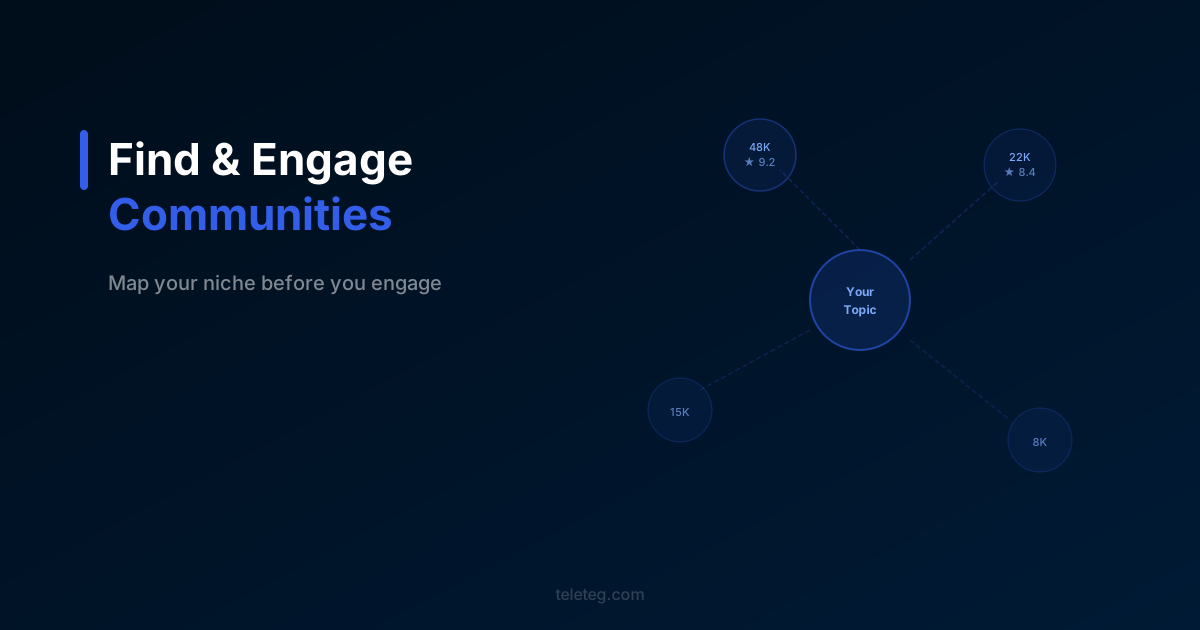
The starting point is a landscape view: what communities exist in your topic area, how large are they, how active, what languages do they operate in, and what is the general quality of discourse?
Teleteg makes this mapping process fast. Search your topic keyword, apply language and activity filters, and within a few searches you have a structured picture of the community ecosystem — who the major players are, where the active discussions are happening, and what the range of community sizes and qualities looks like.
This landscape view answers the first critical question: is there an existing community worth engaging with, or is there a gap worth filling?
Evaluating Communities Before Engaging
Not all communities that appear relevant actually are. Four signals help separate genuine communities from low-quality ones:
- Activity rating — is the community actively posting and engaging right now, or has it been dormant?
- Message quality index — is the content substantive, or is it mostly forwards, automated posts, and one-line reactions?
- Member count vs. online ratio — a community with 100,000 members and 0.1% online ratio has no real audience. One with 5,000 members and 8% online is genuinely active.
- Creation date — established communities with years of posting history behave differently from recently-formed ones. Both can be valuable depending on your purpose.
Engaging Effectively
Engagement that works follows the same pattern regardless of context: presence before promotion. Join the community. Read what is already being discussed. Understand what the members value and what the norms are. Contribute something useful to an existing conversation before introducing yourself or your project.
The amount of time this takes varies — in some communities a few days is enough, in others it takes weeks. The investment is proportional to what you want from the community. A one-time mention of a relevant resource requires less groundwork than an ongoing collaborative relationship with the admin.
Direct Outreach to Admins
For cross-promotion, collaboration, or research partnerships, direct outreach to channel and group admins is often the most effective approach. The key is specificity: explain who you are, what your community or project is, why the collaboration would be relevant to their specific audience, and what you are proposing concretely.
Generic "let us collaborate" messages are ignored. A message that demonstrates you have actually read their channel and thought about why their audience would find your content valuable gets responses.
Ongoing Monitoring
The Telegram landscape changes continuously. Communities that were most active six months ago may have declined; new communities may have emerged that are now the centre of discussion in your niche. Building a regular review into your process — running key searches quarterly on Teleteg and noting what has changed — keeps your understanding current without requiring constant attention.