Telegram sits in an odd spot in European platform regulation. It's central to political communication across much of the continent. It shows up constantly in research on coordinated influence campaigns. And it falls outside the tier of the Digital Services Act that carries the heavy obligations. If you work in policy analysis, that combination shapes both what you can ask and what you can get.
Where Telegram sits
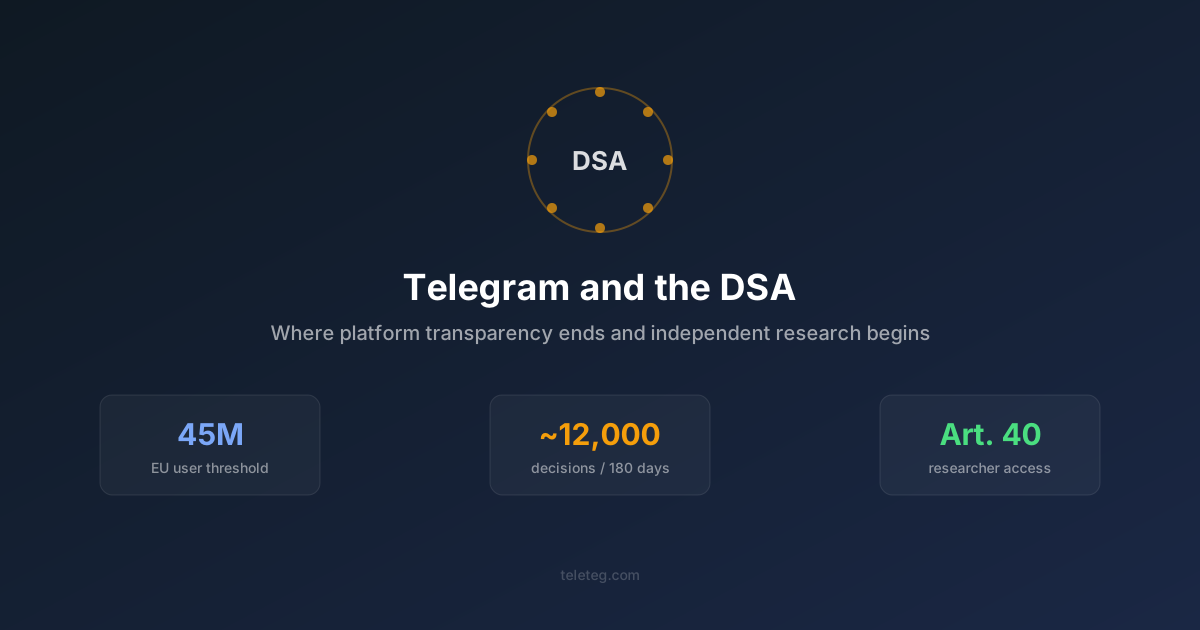
The DSA's strictest rules — systemic risk assessments, independent audits, vetted researcher access to data — apply to Very Large Online Platforms and Search Engines. Designation depends on average monthly users in the EU. In its own DSA guidance, Telegram says that as of August 2026 the relevant services were still well under the 45 million threshold.
So baseline transparency and notice rules apply. The systemic risk regime, and the researcher access that comes attached to it, does not.
What the moderation numbers say
The Commission's Transparency Database publishes statements of reasons — the explanation a platform owes you when it restricts your content. Someone went through it in July 2026 and found roughly 12,000 moderation decisions from Telegram across the previous 180 days.
Set that against the platform's size and how often it turns up in disinformation research, and the number becomes the argument rather than a detail supporting it. Nothing in the DSA stops a platform from moderating coordinated abuse voluntarily. Other non-designated services publish far more extensive rules and act on them. Telegram has chosen to do less, deliberately.
Article 40 doesn't reach as far as you'd hope
Article 40 created something genuinely new: a legal right for independent researchers to get platform data in the public interest. It's a real advance. It's also narrower in practice than the headline suggests:
- It follows designation. The vetted researcher route runs to VLOPs and VLOSEs. A platform under the threshold isn't in scope.
- Requests must be necessary and proportionate to a specific piece of systemic risk research — a test that's been read narrowly, with refusals on privacy and confidentiality grounds.
- You can't redistribute what you get. Sensitive data obtained this way can't be shared, so replication rests on documenting the request rather than passing along the dataset.
Harmonised, machine-readable transparency reports landed in February 2026, and for the first time you can compare platforms directly. They describe moderation activity. They don't describe the conversation itself.
What this leaves analysts with
Put plainly: for the platform most often named in European work on coordinated messaging, the regulatory data pipeline is the thinnest. If you're studying how a narrative spreads, how it crosses borders, or where a community goes after an enforcement action, you can't request that from Telegram. You observe what's already public.
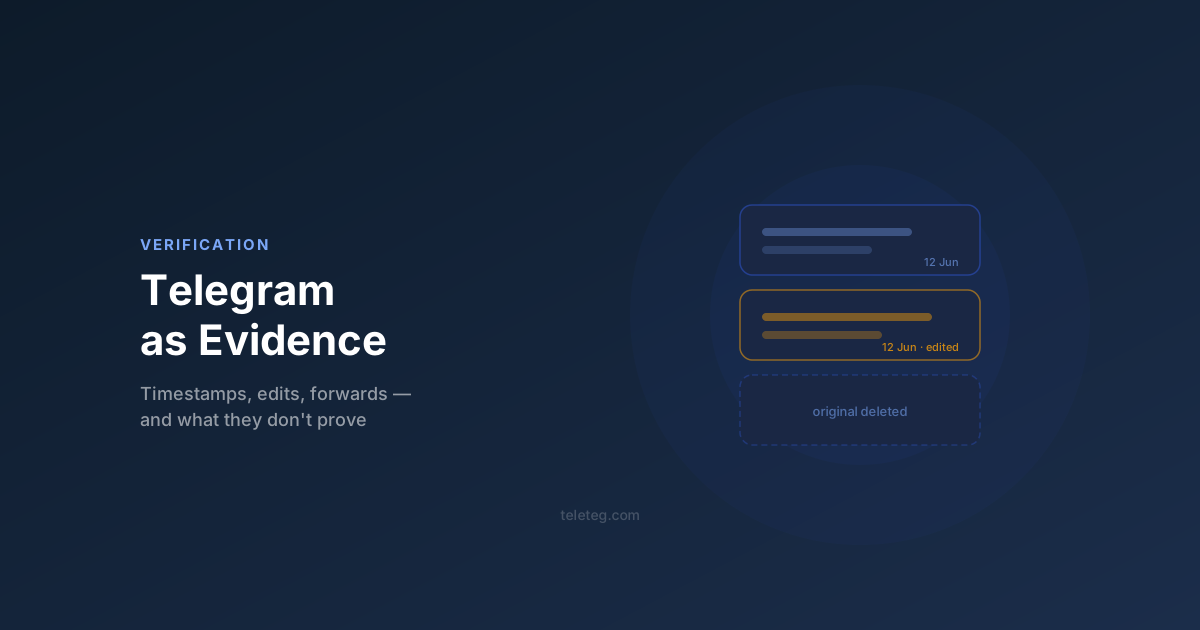
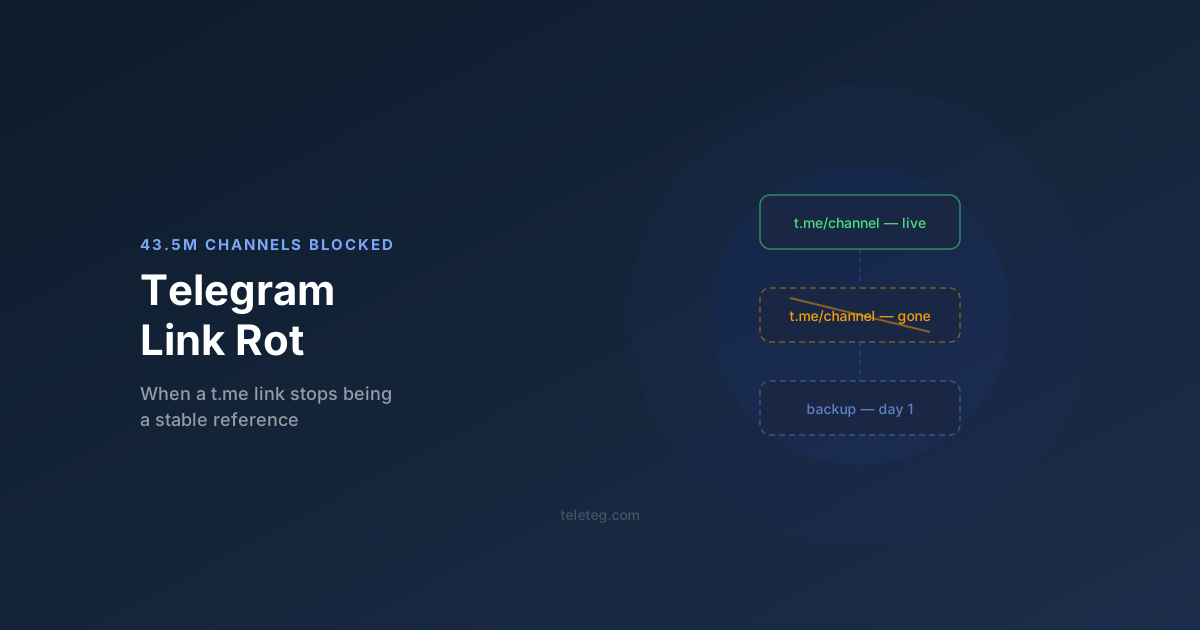
That's not a consolation prize. Public channels and open groups are where most of this happens, and you don't need special access to see them. What you do need is ordinary research discipline: define your corpus before you start collecting, write down the date you observed it, and keep a copy of what was there. Chats get renamed, restricted, and deleted all the time. We've written up how that works in practice for journalists, researchers, and NGOs.
Using public indexes honestly
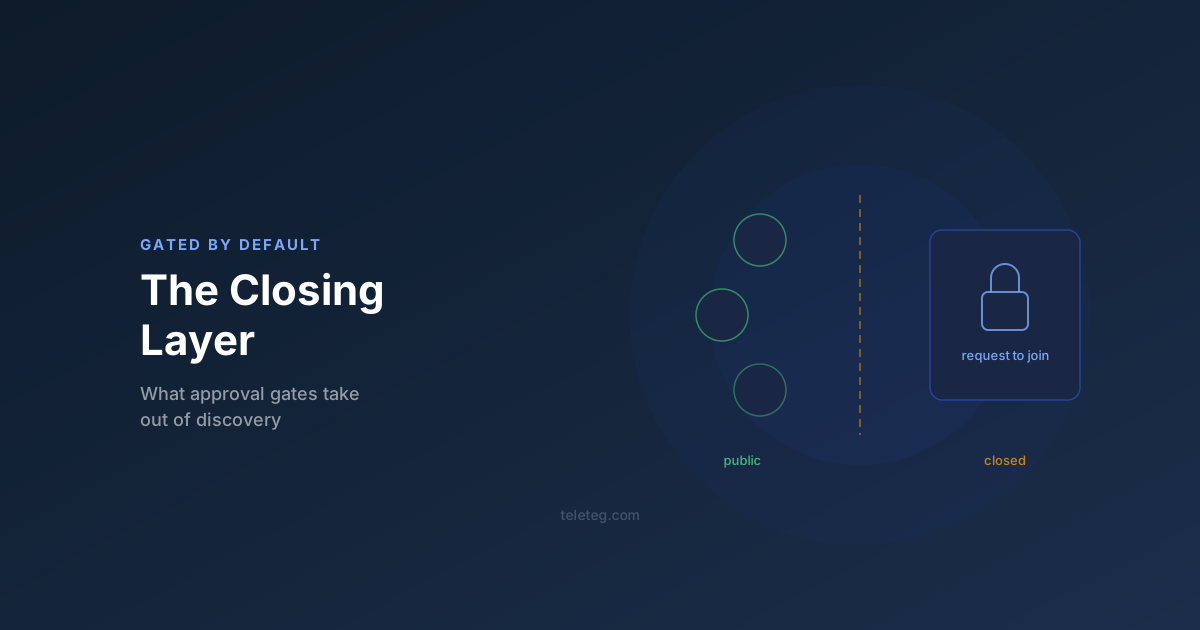
An independent index of public Telegram content does one specific job here: it lets you establish that something existed, under a given name, on a given date, without negotiating with the platform. State the limits when you publish — coverage is partial, indexing lags behind reality, and nothing outside the platform sees private or restricted chats. Knowing how these indexes are built and where they break is part of using them properly.
Being upfront about that isn't a weakness in your method. It's the difference between a claim you can defend and one you can't, and reviewers are asking more often than they used to.
The short version
Telegram's absence from the VLOP list follows logically from how the DSA defines scale. It also means the regulation's best research tool doesn't reach one of the platforms researchers most need to look at. Until that changes, careful documented observation of public content is what evidence about Telegram rests on — and how well you document it is what makes it stand up.