For most of Telegram's life, a t.me link was about as stable as a URL gets. Channels rarely disappeared, usernames rarely changed hands, and if you cited a channel in a report, the link still worked a year later. That assumption quietly stopped being true.
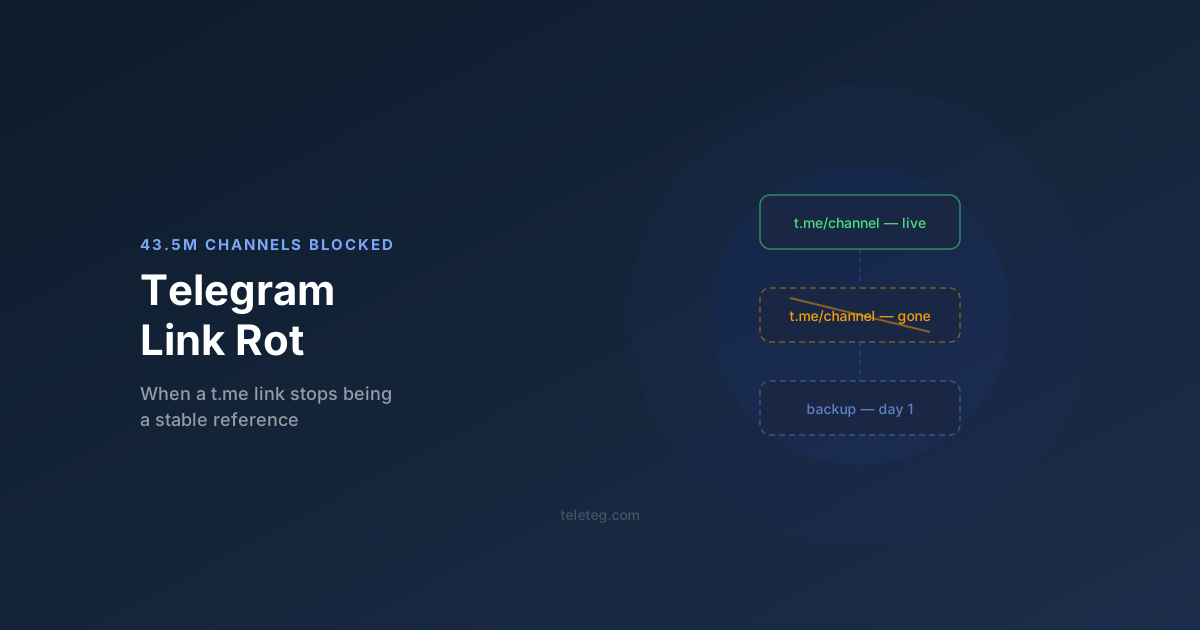
Telegram blocked more than 43.5 million channels and groups during 2025. Enforcement did not settle back down afterwards: daily takedowns moved from a historical baseline of roughly ten to thirty thousand to a sustained eighty to a hundred and forty thousand, with single-day peaks well past half a million. Whatever you think of the policy, the practical consequence is the same for everyone doing research on the platform. Links rot now, and they rot fast.
What actually breaks
Three different failures look identical from the outside, and it matters which one you are dealing with.
- The channel was removed. The username is gone, the content is gone, and in most cases the username becomes available for someone else to claim.
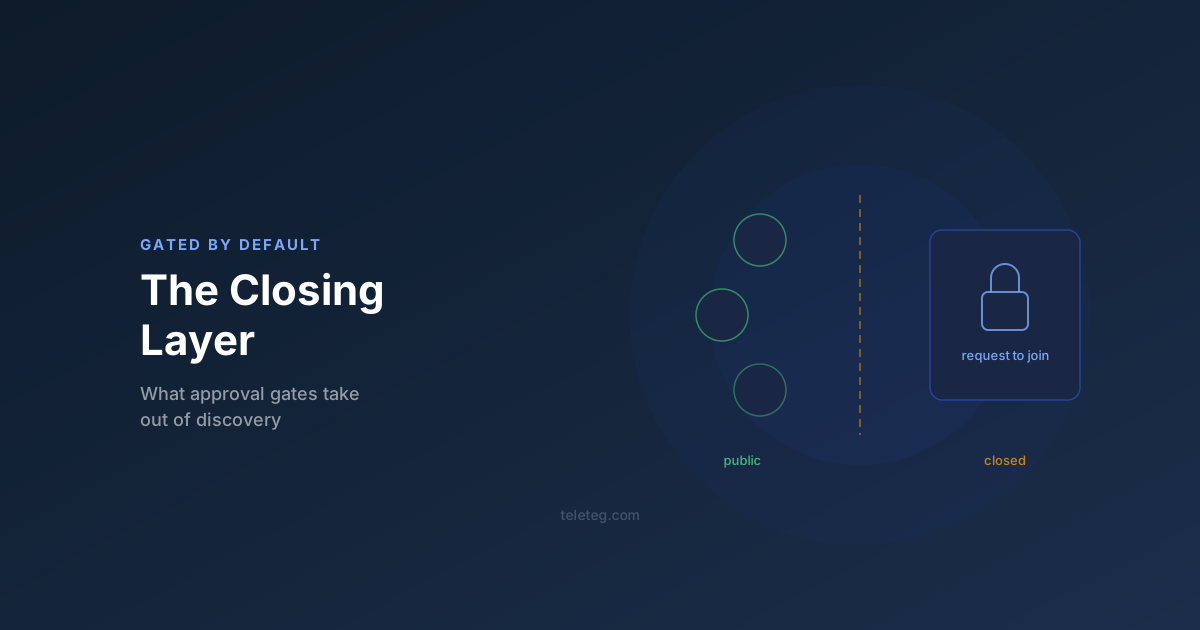
- The channel went private. Nothing was deleted. The operator flipped a setting and the public entry point closed. Everything inside continues as before.
- The operator abandoned it and moved. The chat is still reachable, still indexed, still ranking in search results — and completely stale.
A dead link tells you nothing on its own. A removed channel and an abandoned one require opposite responses, and the difference is invisible unless you recorded something about the channel before it went dark.
Removal is not deletion
This is the part people get wrong. When a channel is taken down, its content does not leave Telegram. It leaves that address. Forwarded posts sitting in dozens of other chats survive with the original attribution intact. Screenshots circulate. And for anything with a committed audience, a backup channel usually goes up within hours — often prepared in advance, sometimes announced before the takedown ever happens.
Security researchers tracking criminal communities have documented this cycle repeatedly: the enforcement action lands, the audience reassembles somewhere adjacent, and the material keeps circulating through forwards in the meantime. The same dynamic applies to entirely legitimate projects that got caught by an automated sweep. Removal interrupts a channel. It rarely ends one.
Finding the successor
When a channel disappears, the trail forward is usually still public. Sister chats linked into the same project, an unchanged bio pattern, a naming convention the operator has used before, mutual mentions from other channels in the same niche — any of these can point at where the audience went. Working from what a channel described itself as, rather than from the username alone, is what makes this tractable, and it is a large part of why a search index that keeps its own record is more useful here than in-app search, which only ever shows you what exists at this instant.
The one thing that does not work is refreshing the old link and hoping. If the username has been reclaimed by someone unrelated, you will find an active chat under a familiar name, which is worse than finding nothing at all.
What to record before you need it
Discipline here costs a minute per source and saves the whole reference later. When you cite a channel, capture the numeric ID rather than only the username, the title and bio as they read on that day, the subscriber count, and the date you looked. Archive the specific posts you rely on — not the channel, the posts. If you are documenting a network, note which chats were linked to which on that date, because clusters change without any individual chat changing.
None of this is exotic. It is the same evidentiary habit we have written about for newsrooms and NGOs working on Telegram, applied to the fact that the platform now deletes at industrial scale.
The short version
Treat every Telegram link as perishable. A citation that is only a t.me address is a citation with a countdown on it, and at current enforcement volumes the countdown is short. Record enough about a channel to identify it after it stops existing, archive what you actually rely on, and assume that a disappeared channel has a successor somewhere rather than treating the story as closed.