Teleteg is a public Telegram search engine indexing millions of public channels and groups. This article is part of our knowledge base on Telegram search and community discovery.
Telegram has a built-in search function. So why use a separate tool? This comparison covers exactly what each does — and where the gap between them matters in practice.
📊 Quick comparison
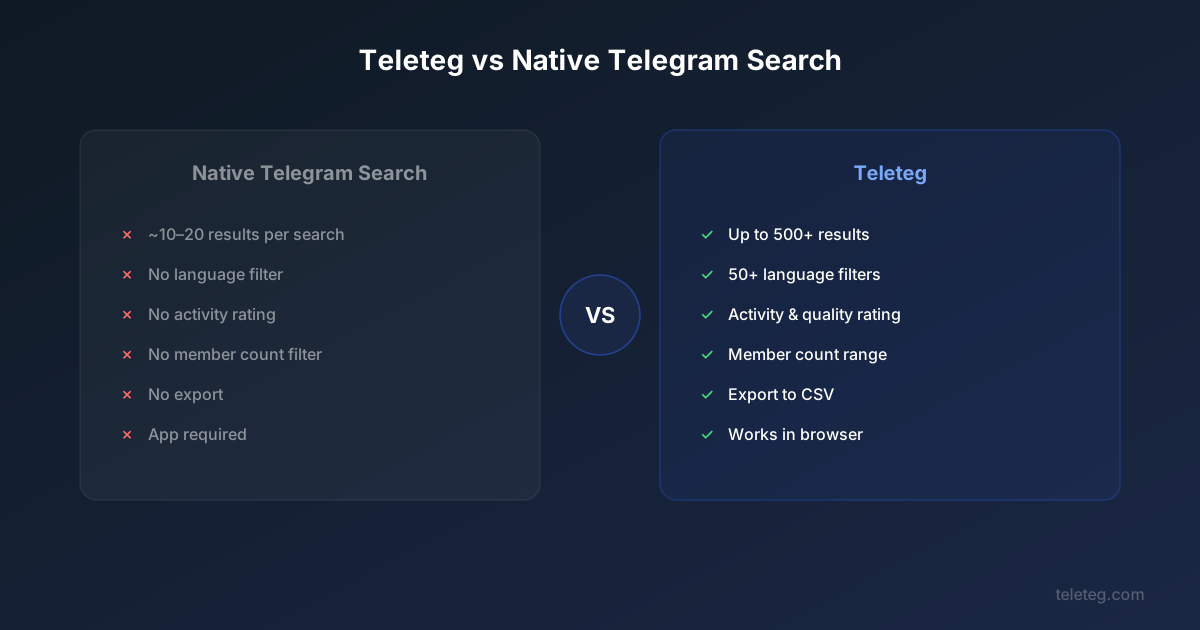
| Feature | Native Telegram | Teleteg |
|---|
| Results per search | ~10-20 | Up to 500+ |
| Language filter | ❌ | ✅ |
| Activity rating | ❌ | ✅ |
| Member count filter | ❌ | ✅ |
| Creation date filter | ❌ | ✅ |
| Export results | ❌ | ✅ |
| Works without Telegram app | ❌ | ✅ |
What Native Telegram Search Does Well
Native search is fast and works directly inside the app. If you already know the exact name or username of a group or channel, it will find it instantly. For in-conversation message search — finding something you read earlier in a specific chat — it is the right tool and no third-party alternative replaces it.
Where Native Search Falls Short
The limitations become apparent the moment you're looking for something you don't already know about. Native search returns a small number of results, ranks them opaquely, and provides no filters. There is no way to say "show me active English-language groups about this topic with at least 5,000 members formed in the last two years." That kind of query is impossible in native search and straightforward in Teleteg.
Coverage is also limited. Telegram's native search does not index all public communities — many active, legitimate groups and channels simply don't appear. Teleteg's index is broader and updated regularly.
When to Use Each
Use native Telegram search when you know what you're looking for — a specific channel name, a known username, or messages within a conversation you're already in.
Use Teleteg when you're discovering: finding communities you don't know about, evaluating multiple options side by side, researching a topic across languages, or building a structured list of communities for analysis.