Telegram periodically updates its API, and the changes that matter most are rarely the ones that get the most attention. This piece focuses on what developers working with Telegram's API actually need to pay attention to when updates land.
Teleteg is a public Telegram search engine indexing millions of public channels and groups. This article is part of our knowledge base on Telegram search and community discovery.
What the Telegram API Covers
Telegram offers two main interfaces for developers. The Bot API is the simpler one — it's designed for building bots and is well-documented, relatively stable, and handles most common use cases. The MTProto API is the lower-level protocol that Telegram's own clients use, giving access to a much wider range of functionality but requiring significantly more implementation work.
Most updates that affect third-party developers involve the Bot API, since that's what the majority of Telegram integrations rely on.
What Changes in API Updates
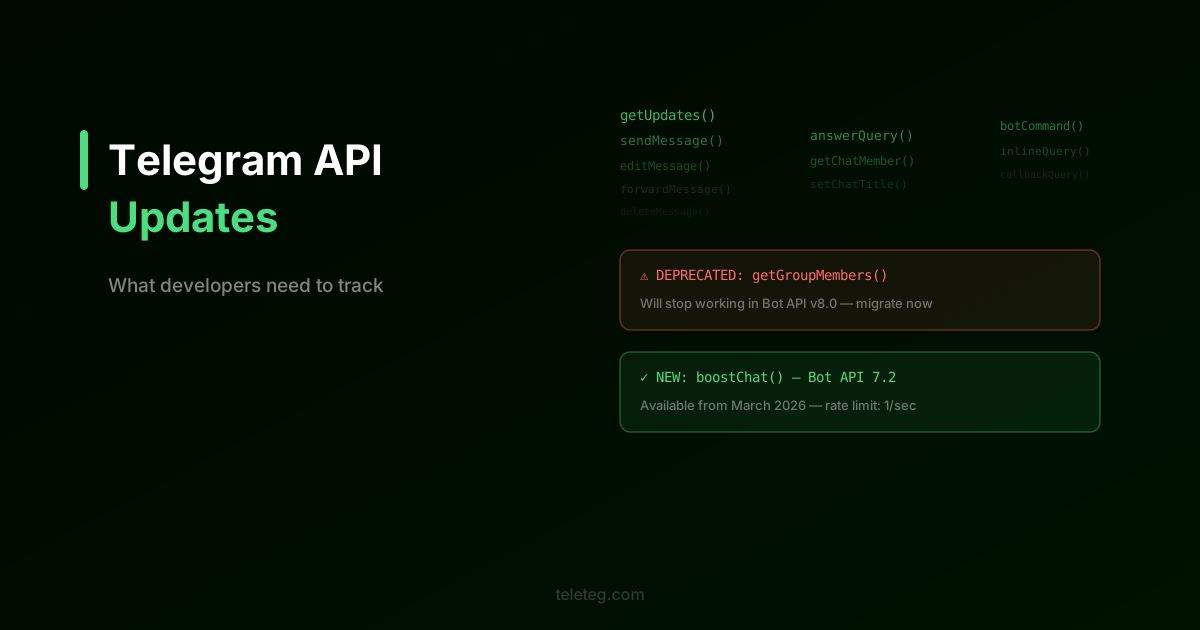
Typical API updates fall into a few categories: new methods and parameters (expanding what bots can do), deprecated methods (old approaches that will stop working in future versions), rate limit adjustments, and changes to how certain data types are structured.
Deprecated methods are the most important to track. Telegram usually provides a transition period before removing functionality, but ignoring deprecation notices and then scrambling when something breaks is a common and avoidable problem.
How to Stay Current
Telegram publishes a changelog on its developer documentation site. It's worth reading each update entry carefully rather than skimming, because the implications of a change aren't always obvious from the headline. A change to how a particular object type is returned, for example, can silently break parsing code that worked fine before.
For teams with active Telegram integrations, setting up an alert or a regular review process tied to the Telegram developer changelog is more reliable than noticing changes reactively when something stops working.
Third-Party Clients and Unofficial APIs
Unofficial clients and tools that use the MTProto API directly face a different set of constraints. Telegram has become more active in enforcing terms of service around automated account behaviour, and certain patterns that were tolerated in earlier versions of the API now result in account restrictions or bans.
For developers building tools that interact with Telegram at scale, staying within the bounds of what the API explicitly permits — rather than relying on what hasn't been restricted yet — is the more sustainable approach.
A Note on Scraping and Data Collection
The API provides legitimate access to public channel and group data within defined rate limits. Tools that operate within these limits, authenticate properly, and don't simulate human behaviour in automated ways generally remain functional across updates. Tools built around exploiting gaps tend to break more frequently as the platform evolves.