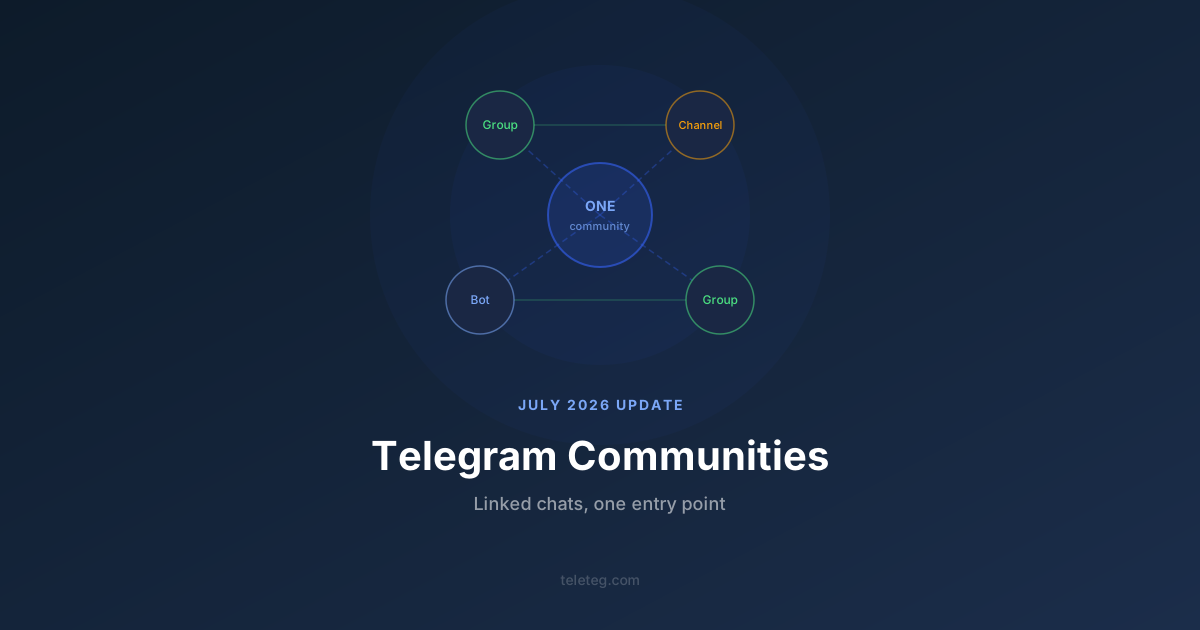
On 14 July, Telegram launched Communities: groups, channels, and bots tied together into one unit, where members can see the rest of the set and jump into any of it. The same update brought a visual rich text editor with AI writing tools and ephemeral bot replies inside groups. Those got the attention. Communities is the one that matters longer, because it changes the shape of the thing people find.
What a Community is
Think about a typical Telegram project: a channel for announcements, a group for discussion, a support bot. Until July, those were three unrelated things. Three usernames, three member counts, three links. If you landed on one of them, you had no way of knowing the others existed unless somebody pinned a message saying so.
Now they can be bound together, and the client shows the connection. So the entry point isn't a single chat anymore. It's a cluster, and the member sees the cluster.
Why discovery looks different now
Telegram discovery has always worked one name at a time. You search, you get a chat. With a grouping layer in place, one good result can hand you four or five places to go instead of one.
That cuts both ways. Better for the person searching. Messier for anyone counting, because the same audience shows up several times across linked chats. If you're comparing communities by subscriber numbers, you now need to know whether you're looking at independent chats or one project wearing four hats — and in-app search won't tell you.
What operators should think about
- Your weakest chat is now on display. That discussion group nobody has posted in since March used to be invisible. Now it's one tap from every subscriber you have.
- Names have to match. When four chats sit side by side and they're called four different things, it reads as sloppy. Simple to fix. Widely ignored so far.
- You can drop the cross-promo pins. Structure does that job now. Use the pinned slot for something people actually need.
What it means if you're monitoring
For anyone tracking public Telegram activity, this is a gift. Connections you used to infer — shared admins, cross-posted content, the same invite link turning up twice — are now declared by the operator. A community is a network graph somebody published about themselves.
It also raises the bar for how you cite things. Saying "the channel" isn't precise when that channel is one node in a declared cluster sharing an audience. If you're documenting a network, record what the cluster contained on the day you looked, because chats can be added or dropped without any individual chat changing. Same discipline we've written about for newsrooms and NGOs.
Still unclear
A few things haven't settled. How hard Telegram will push communities in its own search. Whether cluster membership stays visible over time. What happens when a chat goes private after joining one. My working assumption is that what you see is a snapshot, not a record — and I'd treat it that way until proven otherwise.
The short version
Nothing about what's public on Telegram changed. What changed is how public things are organised, and operators control that entirely. Any tool, workflow, or bit of analysis that treats a chat as a standalone unit needs to account for the cluster now. Projects that clean up their naming and structure early are going to look a lot more serious than the ones that don't.